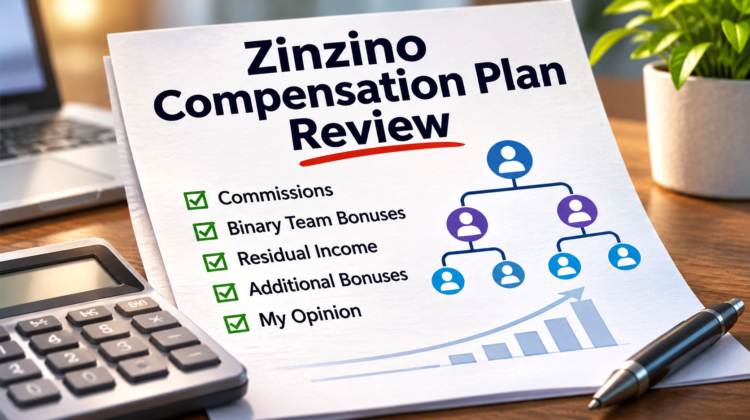
If you’re trying to understand the Zinzino compensation plan, you’re probably discovering that there’s a lot more to it than simply selling a product and collecting a commission. Zinzino combines customer sales bonuses, recurring team commissions, a two-sided team structure, qualifications, and several additional rewards. In my opinion, it’s one of the more complicated MLM compensation plans I’ve examined. That doesn’t necessarily make it a bad plan. But it does make it harder to answer the question that matters most: how much money will you actually earn?
How Does the Zinzino Compensation Plan Work?
Zinzino is a Scandinavian direct-selling company focused on test-based nutritional products, including its BalanceOil range and health tests. Its compensation plan rewards independent partners for selling products to customers and, when qualified, for sales volume generated through their teams.
The easiest way to understand the plan is to separate it into two parts. First, you can earn cash bonuses on qualifying customer purchases. Second, you may qualify for recurring team commissions and other bonuses based on sales credits, your customer base, team structure, and rank.
Those two parts sound simple enough. The complications begin when you add different kinds of credits, pay points, multiple income centers, left-and-right team balancing, and separate qualifications for different bonuses. The figures below come from Zinzino’s published US compensation materials; exact terms should be confirmed against the current plan for your market.
You can study every bonus in the Zinzino plan, and none of them pay until someone says yes. So the real question is who you’ll talk to this week, and the week after that. If you want a way to keep new people coming in, with experienced marketers to turn to when you’re stuck, click the banner below and get rolling on the only thing that makes you money.

How Much Does Zinzino Pay on Personal Customer Sales?
One of the more straightforward parts of Zinzino’s plan is its customer cash bonus. The published US plan describes bonuses ranging from 10% to 30% on qualifying purchases, depending on your customer career title.
- Back Office Entrance, Q-Team and X-Team: 10%.
- A-Team: 20%.
- Pro-Team: 25%.
- Top-Team: 30%.
These are percentages of qualifying sales under the plan’s rules, not a promise that you’ll receive that percentage on every dollar a customer spends. The applicable product, price basis, and type of order matter.
The published customer career qualifications include four customer points and 20 personal credit volume for Q-Team; 10 points and 50 credits for X-Team; 25 points and 125 credits for A-Team; 50 points and 250 credits for Pro-Team; and 100 points and 500 credits for Top-Team.
Notice that these qualifications use both customer points and personal credit volume. You can’t necessarily look at the number of customers you have and know your title without checking the corresponding credits.
Does Zinzino Pay Residual Income?
Yes. Zinzino has recurring-income components, which is one reason its plan may appeal to people who want to build something longer term rather than continually chase one-time sales.
But there’s an important distinction between earning a cash bonus on a customer order and qualifying for the broader recurring commission system. Zinzino’s published US plan says customer cash bonuses do not require active partner status, while recurring team and monthly customer bonuses have qualification rules. After the applicable grace period, partners generally need to qualify at Q-Team for the recurring bonuses described in that document.
I’ve always preferred residual income over having to start at zero every month. I’ve worked with both models over the years, and I know how valuable an established base of repeat customers can be. But recurring purchases alone don’t tell you what your monthly check will be. You still need to understand the qualifications and how the commission is calculated.
How Does Zinzino’s Binary Team Commission Work?
This is where the plan becomes more difficult to follow. Zinzino uses a two-sided team structure within its income centers. Product orders generate credits, and the plan uses balanced credits from the left and right sides to calculate eligible team commissions.
According to the published plan, team commissions can range from 10% to 15% of eligible weekly credit volume, with a 2-to-1 team balance requirement. In practical terms, a large amount of sales on one side does not automatically mean you’ll be paid on all of it. The volume on your other side matters too.
For example, imagine one side produces far more credits than the other. Even if your total organization is generating substantial sales, the amount that qualifies as balanced volume may be limited by the smaller side. The plan also contains rules for carrying forward eligible credits while you remain qualified.
This isn’t unique to Zinzino. I’ve built businesses using binary, unilevel, and matrix compensation plans. Every structure has trade-offs. With a binary, I pay particular attention to how much of the team’s actual sales volume can become commissionable volume for the individual partner.
Another important distinction: a percentage of credits is not necessarily the same thing as that percentage of retail sales dollars. Zinzino uses its own credit and pay-point calculations, so don’t assume that $1,000 in product sales automatically translates into a fixed percentage paid directly to you.
What Other Bonuses Are Available?
In addition to customer cash bonuses and weekly team commissions, Zinzino’s published compensation materials describe several other possible rewards. These include a Customer Acquisition Bonus tied to qualifying new customer and partner kit volume, higher-rank volume commissions, monthly customer bonuses, title-related incentives, and product rewards.
The published plan describes higher-level volume commissions ranging from 1% to 4%, subject to title, balance requirements, and weekly caps. The Customer Acquisition Bonus uses qualifying credits on both sides and has its own thresholds and limits. These are not automatic additions to every partner’s earnings.
Zinzino also promotes a Zinzino for Free program. Its current US rewards page says a partner can qualify for a free monthly product subscription, excluding shipping, by meeting conditions that include enrolling four or more qualifying subscribing customers whose combined first-generation purchases reach at least 40 credits.
I see the attraction of having several ways to earn. But the downside is that it becomes harder for a new person to predict which bonuses they’ll actually qualify for, especially when some are tied to personal customers and others depend on balanced team volume or rank.
Why I Find the Zinzino Compensation Plan So Complicated
After more than two decades in network and affiliate marketing, I’ve looked at a lot of compensation plans. My biggest criticism of Zinzino’s isn’t that it offers too many bonuses or that its structure is necessarily unfair. It’s that there are so many moving parts to understand before you can estimate your income with confidence.
You need to distinguish sales dollars from credits, credits from pay points, personal customer qualifications from team qualifications, and total team production from balanced commissionable volume. Then you have to account for which bonuses apply to your current title.
Personally, I don’t think a complicated compensation plan is automatically better than a simple one. Many MLM companies divide their available commission pool into different categories and incentives. The number of bonus names doesn’t tell you how much an average partner earns.
What I would want is a clear example showing the actual dollar payout for a realistic customer base and a modest team, after all qualifications are applied. Not a theoretical maximum based on a huge organization.
And it doesn’t much matter how the bonuses are structured, the only thing that gets you paid in the end is finding and enrolling new customers and reps. If you’re ready to get rolling on what matters most, click the banner below and let’s get started.
How Much Can You Realistically Earn With Zinzino?
There’s no responsible way to estimate your personal earnings just from a commission chart. You would need to know how many customers you acquire, what they purchase, how long they stay, which bonuses you qualify for, your team’s qualifying sales, and your ongoing expenses.
For example, the advertised 10% to 30% customer cash bonus range does not mean every partner receives 30%, and the 10% to 15% team commission range does not mean you’ll receive that percentage on all your organization’s retail revenue.
Before joining, I’d ask Zinzino for its current income disclosure covering your country. Specifically, look for the percentage of partners earning nothing, the median earnings among all partners, and whether the figures are before expenses. I could not verify a current, comprehensive US earnings distribution from the official sources reviewed for this article, so I wouldn’t quote an average income figure as fact.
What Does It Cost to Join and Stay Qualified?
Zinzino advertises partner registration, optional product kits, and product subscriptions, but the exact amount you might spend depends on your market and choices. I would not rely on an older review’s startup price because offers and product-kit prices can change.
More important than the initial price is the ongoing cost of staying qualified for the commissions you want. Ask whether you need recurring personal or customer volume, which purchases count, how the grace period works, and what happens to unpaid or banked credits if you lose active status.
If you plan to use the products yourself, that’s fine. But don’t confuse buying products to meet a qualification with earning a profit. Subtract your business expenses from the commissions you actually receive.
What Are the Pros and Cons of Zinzino’s Compensation Plan?
What I Like
- You can start earning qualifying customer cash bonuses without first building a large team.
- The plan offers recurring commission opportunities tied to ongoing product purchases.
- There are incentives for building a genuine customer base, not just enrolling partners.
- Zinzino has a distinctive test-based product concept that may help customers see a reason to stay subscribed.
What Concerns Me
- The many credits, points, titles, and bonus rules make real-world earnings difficult to calculate.
- Binary team balance can affect how much of your organization’s volume becomes payable.
- Higher percentages and extra bonuses require qualifications that not everyone will achieve.
- Without a clear current income disclosure, it’s difficult to judge typical earnings against the opportunity’s costs.
Is Zinzino’s Compensation Plan Good for Beginners?
It could be, particularly for someone who genuinely likes the products and is comfortable learning the details over time. Zinzino provides a personal e-commerce site and access to training materials, and its rewards page describes sponsor-led getting-started training.
Still, I would encourage a beginner to understand the customer-sales side first. How much do you earn when you acquire a customer? What happens when that customer reorders? What do you need to do to stay qualified? Those questions matter more initially than memorizing every leadership bonus.
I also wouldn’t rely exclusively on making a list of friends and family. That can be a starting point, but it’s not a dependable long-term source of new prospects. Learning to attract interested people online and building an email list you control are skills you can use with Zinzino or practically any other business.
My Final Verdict on the Zinzino Compensation Plan
My overall opinion is that Zinzino offers legitimate ways to earn from product sales and team production, but its compensation plan is unusually complex. I don’t view that complexity as proof of a bad opportunity. I view it as a reason to do more homework before committing your time and money.
I’d want to see simple, real-dollar examples of earnings at several realistic customer and team sizes, along with all the qualifications required to receive those amounts. I’d also want to know whether the products are something customers would keep buying even if there were no income opportunity attached.
Ultimately, I think most people spend too much time comparing compensation plans and too little time learning how to attract customers. Choose products you believe in, make sure the plan is fair and understandable enough for you, and then focus on the skills that actually build a business.
If Zinzino is the right fit for you, that’s awesome. Now it’s time to get focused on the one thing that can actually get you paid: generating ongoing leads to build your contact list, so you can sponsor new customers and reps. Click the banner below and let’s get you rolling.
Affiliate disclosure: I may earn a commission if you purchase through promotional links or banners on this website, at no additional cost to you. My opinions are my own. Earnings are not guaranteed.
Leave a Reply